
Honey vs Agave Nectar Benefits, Glycemic Index and Uses | Zebra Organics
Posted by Zebra Organics on 2026 Apr 21st
The Art of Natural Sweeteners
Honey vs Agave Nectar and How to Choose the Right One
A Modern Guide to Better Sweetness
As consumers move away from refined sugar, natural sweeteners like honey and agave nectar are gaining attention for their flavor, origin, and functionality. Choosing the right sweetener is no longer just about taste. It is about glycemic impact, nutritional value, and culinary use.
Understanding how honey and agave differ can help you make smarter, more intentional choices in your kitchen.
What Is Agave Nectar
Agave nectar is a plant based sweetener derived from the blue agave plant, primarily grown in Mexico. It is naturally sweeter than sugar and contains a high proportion of fructose, which contributes to its smooth taste and lower glycemic response.
Because of this composition, agave nectar is often used in beverages, smoothies, and recipes where a neutral sweetness is preferred.
Explore Premium Organic Agave Nectar
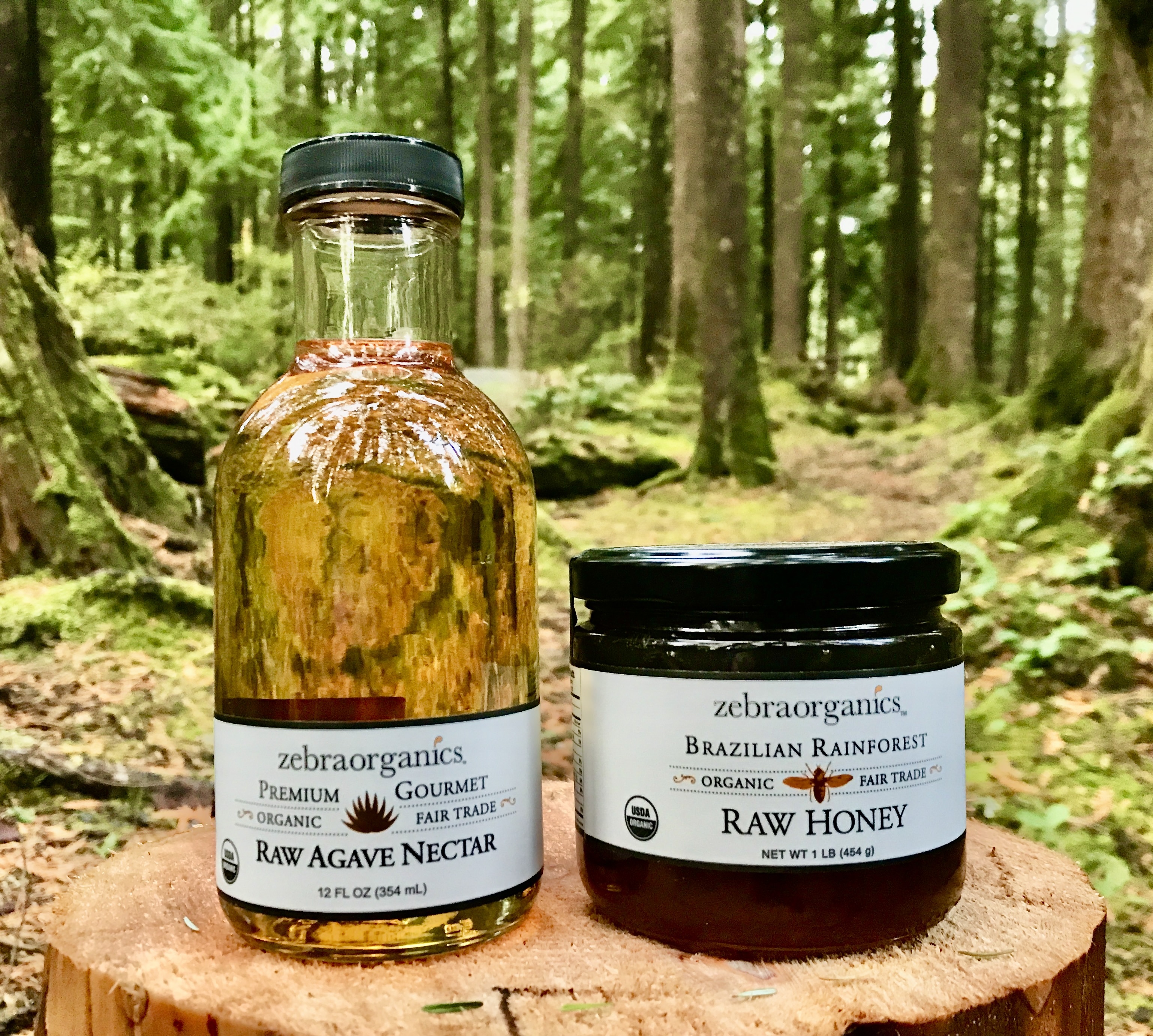
Zebra Organics agave nectar is sourced from the Jalisco Highlands and cold extracted to preserve purity and mineral content (zebraorganics.com)
What Makes Honey Unique
Honey is a natural sweetener produced by bees from flower nectar. Its composition includes both glucose and fructose, giving it a more immediate sweetness and a richer, more complex flavor profile.
Unlike refined sugar, honey contains trace antioxidants and compounds influenced by floral origin. Darker honeys typically contain higher levels of these beneficial compounds, contributing to both flavor depth and nutritional value (EatingWell)
Discover Organic Brazilian Rainforest Honey
Glycemic Index and Sugar Composition
One of the most searched questions is how these sweeteners affect blood sugar.
-
Agave nectar has a lower glycemic index, meaning it raises blood sugar more slowly
-
Honey has a moderate glycemic index, providing quicker energy
This difference comes from agave’s higher fructose content, while honey offers a more balanced glucose to fructose ratio (EatingWell)
However, both are still forms of sugar and should be used in moderation.
Flavor and Culinary Uses
Choosing between honey and agave often comes down to flavor and application.
Use honey when you want
-
Depth and complexity in marinades or baked goods
-
A floral or earthy flavor profile
-
Added moisture and richness
Use agave nectar when you want
-
A clean, neutral sweetness
-
Easy blending in cold drinks
-
A vegan alternative to honey
Agave is also about 25 percent sweeter than sugar, so recipes typically require less.
Nutritional Perspective
Both honey and agave offer advantages over refined sugar, but they serve different roles.
-
Honey provides trace antioxidants and natural enzymes
-
Agave contains plant derived compounds and minerals and offers a lower glycemic response
That said, high fructose intake should be balanced carefully, as excessive consumption may impact metabolic health.
The key is mindful use rather than overconsumption.
Why Ingredient Quality Matters
Not all sweeteners are created equal. Sourcing, processing, and purity significantly influence both flavor and nutritional value.
Zebra Organics focuses on
-
Certified organic sourcing
-
Minimal processing methods
-
Ethical and environmentally responsible production
Their agave nectar is cold extracted from blue agave, while their honey reflects the biodiversity of the Brazilian rainforest, preserving both taste and integrity.
Choosing the Right Sweetener
There is no single best sweetener. The right choice depends on your goals.
-
Choose honey for flavor, depth, and traditional use
-
Choose agave nectar for neutrality, versatility, and lower glycemic impact
Incorporating both into your pantry allows for flexibility, balance, and a more elevated approach to sweetness.
Final Thought
Natural sweeteners are not just substitutes for sugar. They are ingredients with origin, character, and purpose.
By choosing high quality options like those from Zebra Organics, you are not only improving flavor but also supporting a more conscious and intentional way of eating.